This post is part of my 3DR newsletter where I share what I’m (un)learning to build just futures. It centres around my 3DR approach to equity: Decolonize. Disrupt. Dismantle. Rebuild. If you approach the world with curiosity and you’re looking for courageous and compassionate conversations around social justice and collective liberation, subscribe to my newsletter.
““Conflict is the spirit of the relationship asking itself to deepen.””
I read these words in September 2023 while reading Kazu Haga's 'Healing Resistance: A Radically Different Response to Harm,’ and it has stayed with me ever since. More than that, these words have reorganized my life, fundamentally shifting how I look at and move through the world.
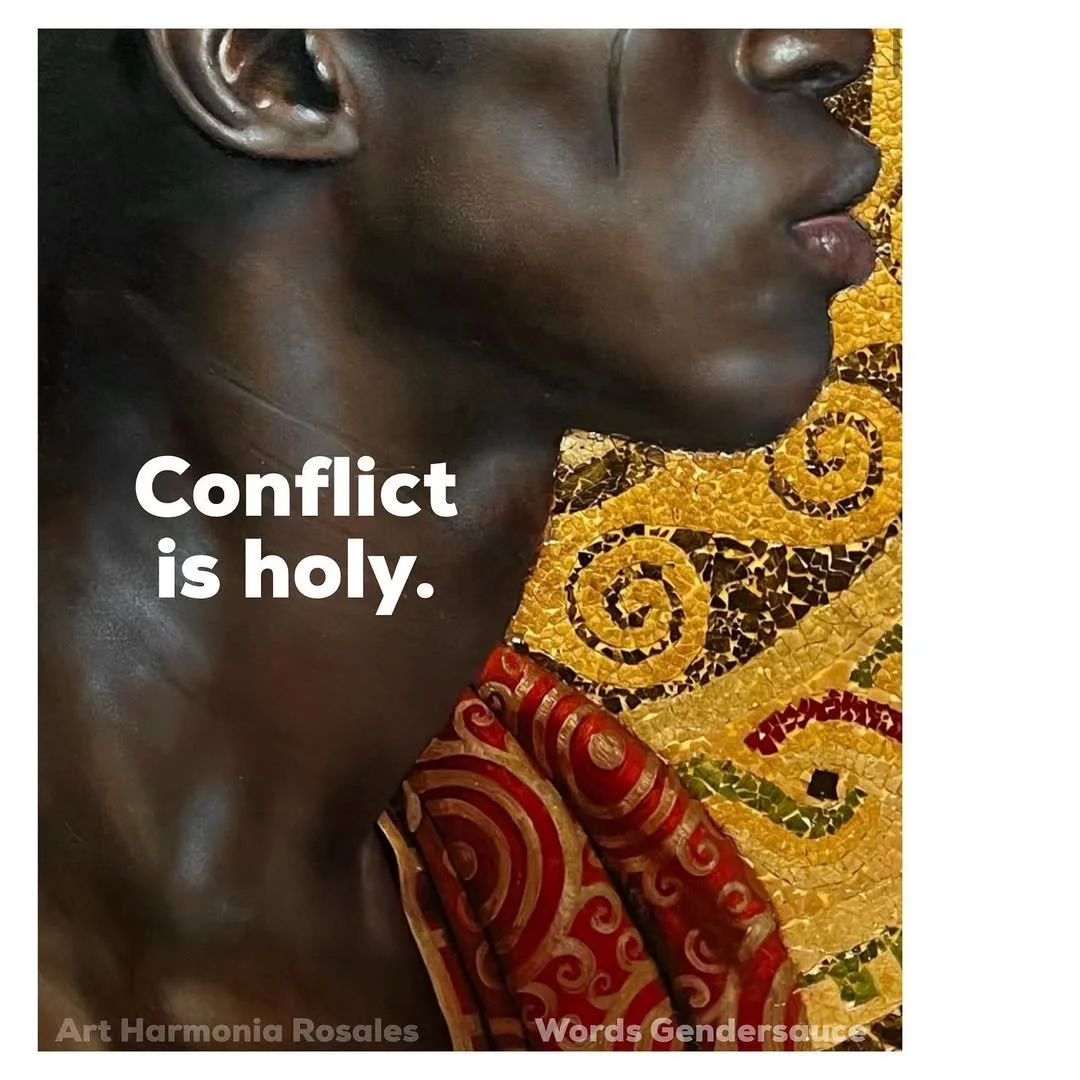
Words by @gendersauce, art by Harmonia Rosales.
Over the last couple of years, I've been working with organizations and community groups to navigate the tensions and conflicts that arise within their circles. I haven’t shared too much about this because, well, it’s an area of work that I’m still very much growing into. To be perfectly honest, I’ve stumbled into this work accidentally, mostly informally, and very much imperfectly.
I've also been working through a lot of conflict within my own personal life, trying to figure out how to articulate my boundaries and how to move through repair (if even possible) with family and friends who have caused hurt.
Navigating the edges and contours of conflict has been beautiful, painful, and life-affirming all at once.
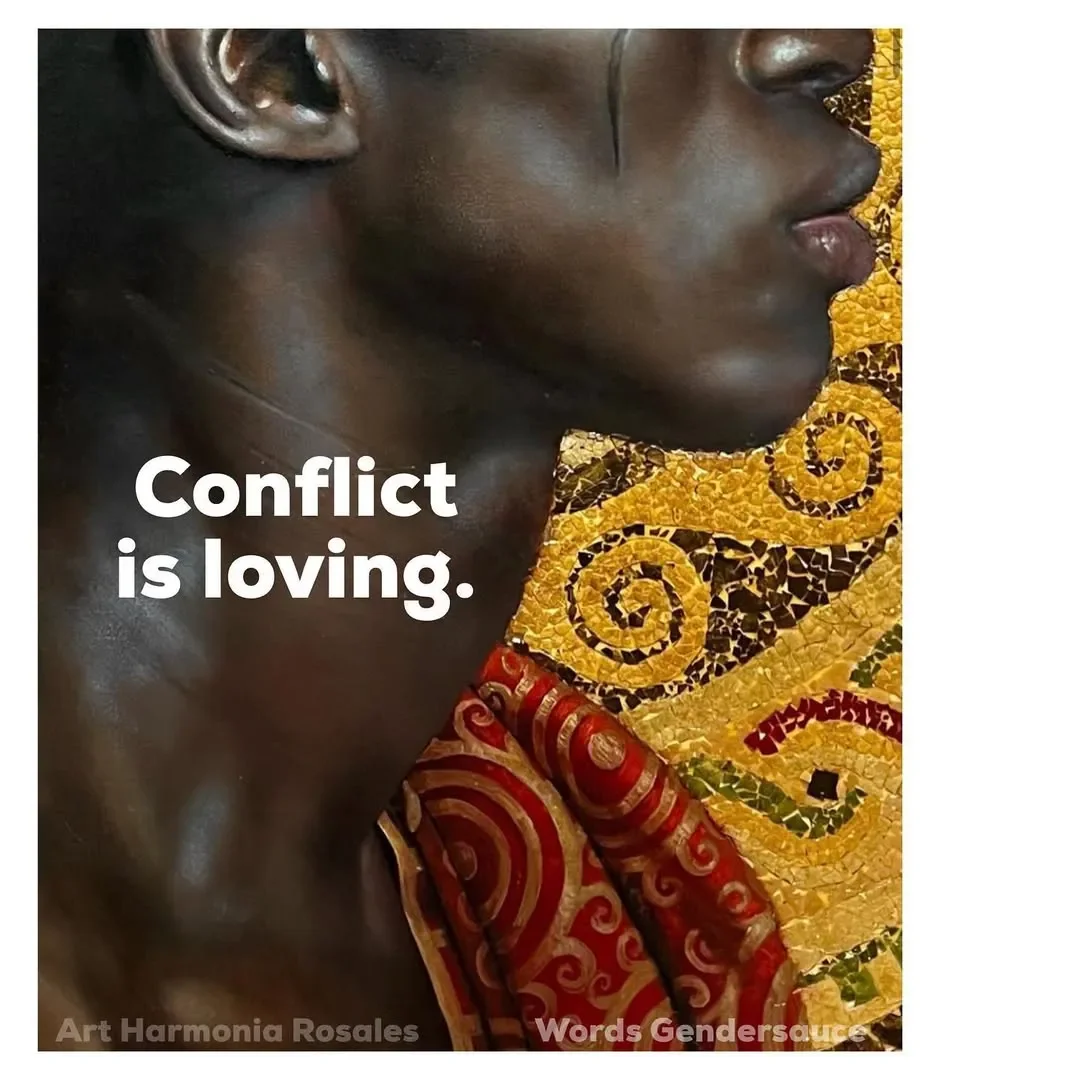
Words by @gendersauce, art by Harmonia Rosales.
Looking at Fractals
I am thinking again about “how we are on the small scale is how we are on the large scale.”
As I deepen my work in supporting people move through interpersonal tensions within their families, professional settings, and social movement spaces, I am seeing so clearly just how terrible we are at being in conflict with each other.
We avoid, we repress, we blow up, we grow resentful, we shame, we cower, we cut ties entirely. We only seem to know how to “do conflict” in ways that hurt, that harm, that destroy something or someone.
Is it any wonder, then, just how bad it’s gotten on the large scale?
We are living at a time when brutal and inhumane deportations are taking place daily on stolen land, when a genocide is being committed and live-streamed in real time, when queer and trans lives are under attack, when when when when…
….the barrage of headlines we are hit with every day is exhausting and relentless and heartbreakingly demoralizing.
In Emergent Strategy: Shaping Change, Changing Worlds – another book that has shaped my heart – adrienne maree brown asks, "How do we shift into a culture in which conflict and difference are generative?"
How do we transform conflict to create generative possibilities? How do we organize our lives to see that “Conflict is the spirit of the relationship asking itself to deepen”? And how do we then extend that into the larger scale to see that conflict is an opportunity to transform our grander systems?
How, indeed.
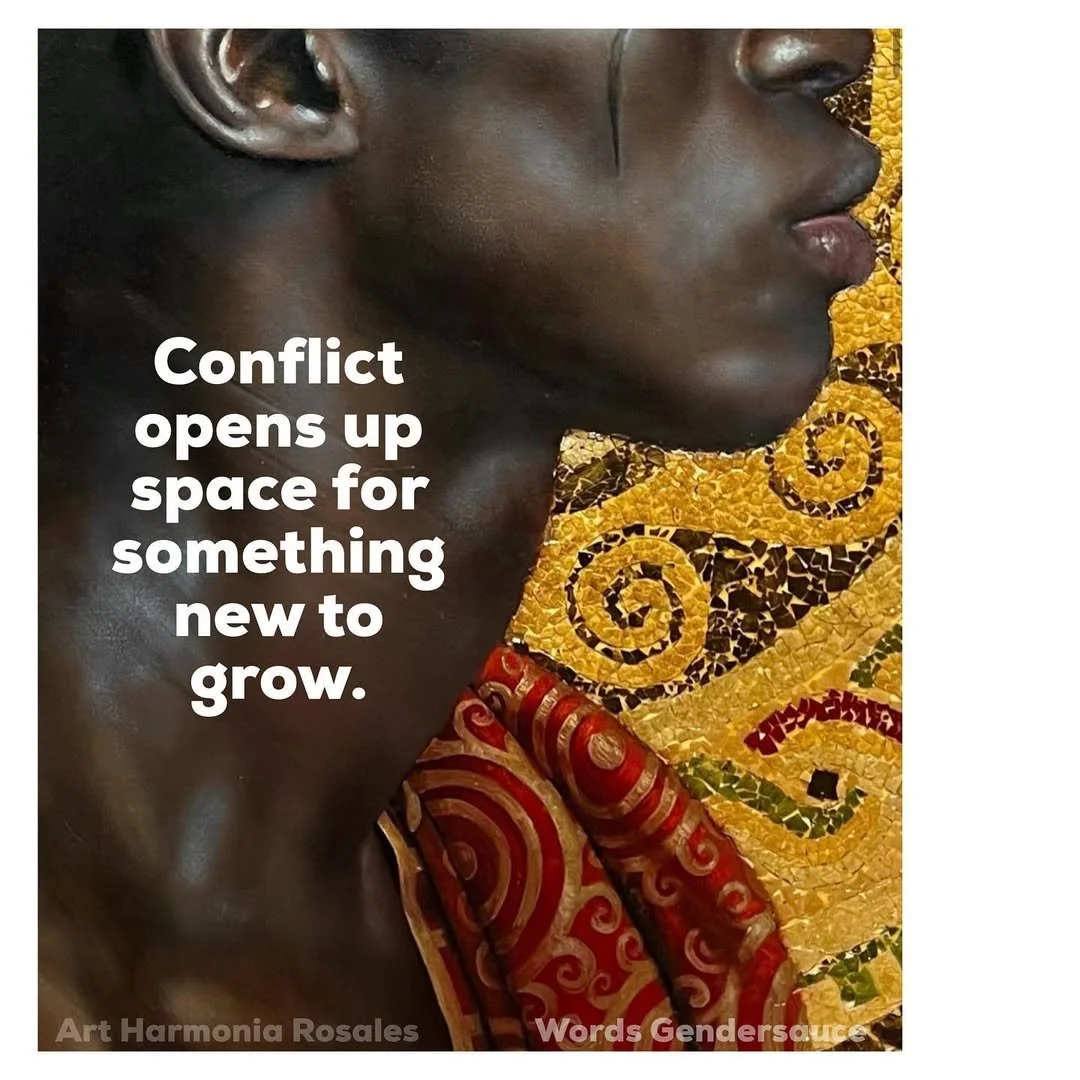
Words by @gendersauce, art by Harmonia Rosales.
Beginning at the small scale, as usual
As if it wasn’t already clear, the need to build and create transformative practices that prioritize healing over harm, over violence, over the same shit we’ve been doing over and over again is becoming so desperately and critically urgent.
That’s why over the last year, I’ve been taking courses on conflict transformation to better understand this thing that we are all so afraid of and so bad at doing. I’ve been learning from experienced mediators and seasoned facilitators on how to hold courageous and caring spaces that make room for, and even invite, the discomfort of conflict and tension.
As in so much in life, this change begins with us.
If you’re curious about this idea of conflict transformation and want to learn more alongside me, I offer these questions for you to explore, tend to, and feel in your body:
How would you define conflict? What does it mean to you?
Are you afraid of conflict? Why or why not?
Growing up, what did conflict look like in your home or in the community around you?
In what ways do you experience conflict today?
How, if at all, has your approach to conflict shifted over the course of your life?
Do the intersections of your identity (think: gender, race, ability, class, etc.) impact your relationship to conflict and how you navigate it? How?
What stories of conflict and its resolution are you familiar with? Have been passed down to you?
How do you experience conflict in your body? What parts of your body are activated? What sensations and feelings emerge in you?
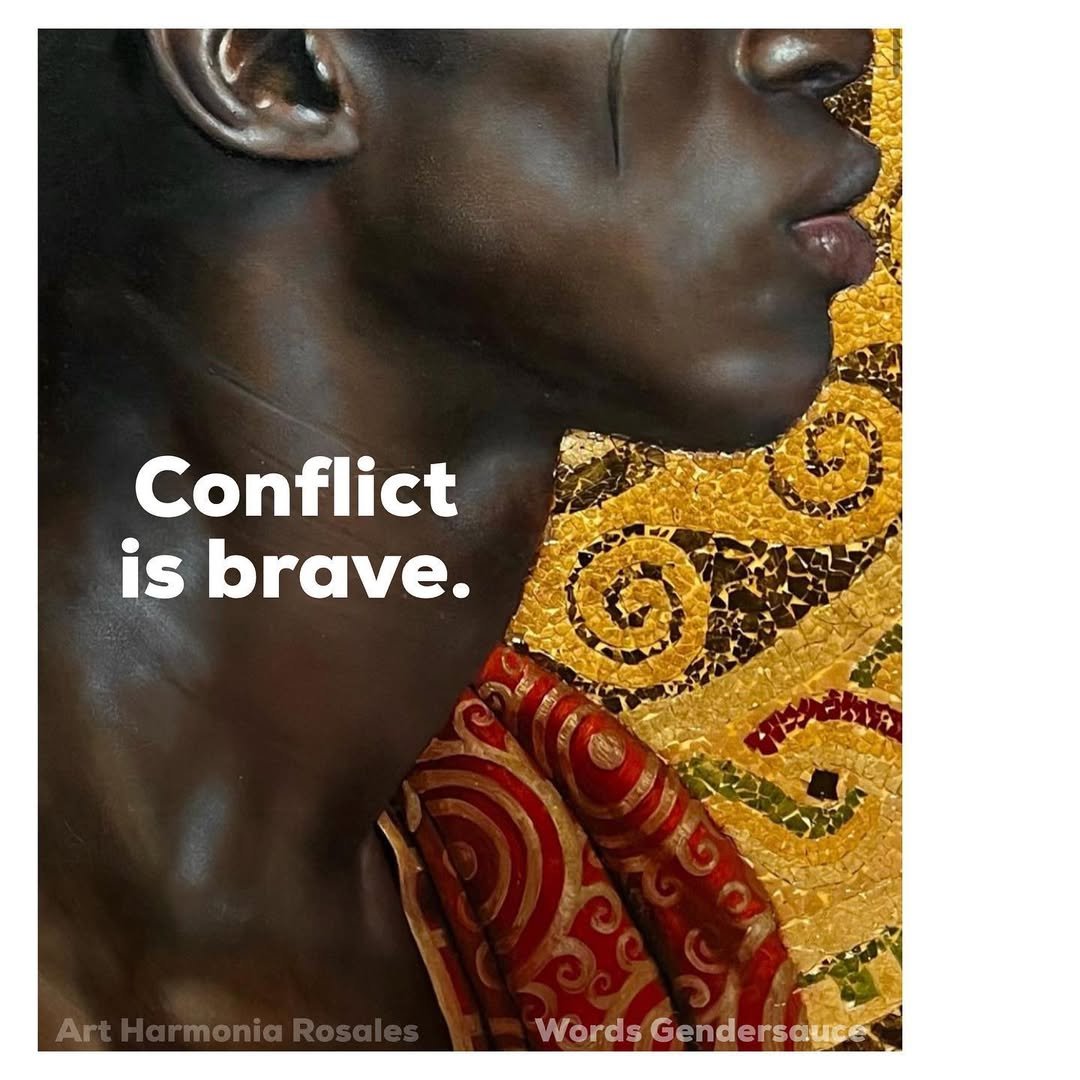
Words by @gendersauce, art by Harmonia Rosales.
I still have so much more to learn!
Like many of us – all of us, really – I have a complicated relationship to conflict that I must unlearn and reshape. I hope to share more with you as I go deeper down this path, and I sincerely hope you’ll continue to join me…
In loving solidarity,
Justine